Polkadot Sensei
Request: Funding for content creation for Polkadot Sensei v1.0.0
Amount: 37,300 USD
Timeline: 8 months after referendum approval
Pre-Proposal: forum.polkadot.network/t/polkadot-sensei
Live Beta Version: https://vonflandern.org/polkadot-sensei/ ← Make sure to try it!
1. Summary
Polkadot Sensei is a gamified educational platform that combines six core elements.
Together, these elements make Polkadot Sensei an educational and activation infrastructure that not only conveys knowledge in an engaging and accessible way, but also produces verifiably qualified and engaged participants for the Polkadot ecosystem:
- Didactics: Complex knowledge about the Polkadot ecosystem is taught in a brain-friendly way (brain-friendly learning).
- Gamification: The acquired knowledge is tested through interactive gameplay.
- On-Chain Requirements (OCR): During gameplay, the player must complete real tasks on the Asset Hub or People Chain (Polkadot or Kusama).
- Community Engagement Actions (CEA): The player can share their progress on social media and earn additional points.
- On-Chain Profile: The On-Chain Profile displays all relevant on-chain data for the player's address in a clear and beginner-friendly format.
- Competition: The player competes for the highest score on the global public leaderboard.
2. Problem Statement
Jonas Keller, 32 years old, architect from Berlin, disposable capital: €72,000.
Jonas wants to make a long-term investment in a forward-looking technology and comes across Polkadot during his research. He finds: decentralization, scalability, OpenGov, XCM, Fisherman, Pallets, GRANDPA, BABE, Treasury, PolkaVM, Asset Hub, Rust, Bridges, Conviction Voting, JAM, Collator, NPoS, Wasm, Interoperability, Bounty... and: "What the hell does Yayoi Kusama have to do with any of this?"
On top of that, there are tons of explainer videos, wiki pages, and dry technical documentation — all presented as a mix of developer jargon and meme posts.
Jonas is persistent and doesn't give up immediately. But after several evenings of research, Polkadot still feels out of reach. He still doesn't really understand what Polkadot actually is, why it's a promising technology, how he's supposed to actively participate, or where to even begin.
Result: Polkadot loses Jonas as an investor, staker, and active community member — even though he's exactly the kind of person the ecosystem desperately needs.
3. Objective
Polkadot Sensei turns people like Jonas into convinced, informed, and active Polkadot users.
Polkadot Sensei transforms research frustration and terminology confusion into genuine understanding and trust in the technology — without requiring anyone to study computer science for six semesters.
Through brain-friendly manga storytelling, playful knowledge testing, real on-chain tasks (skin in the game), viral community engagement, a personal on-chain dashboard, and healthy competition, Polkadot Sensei fosters:
- Deep understanding & genuine trust in Polkadot
- New investors and stakers with "skin in the game"
- Informed governance participants
- A growing, loyal community that truly understands why Polkadot has enormous potential
In short: Polkadot Sensei's goal is to win people like Jonas over to Polkadot for good — through genuine conviction rather than superficial hype.
4. Concept
4.1 Didactics
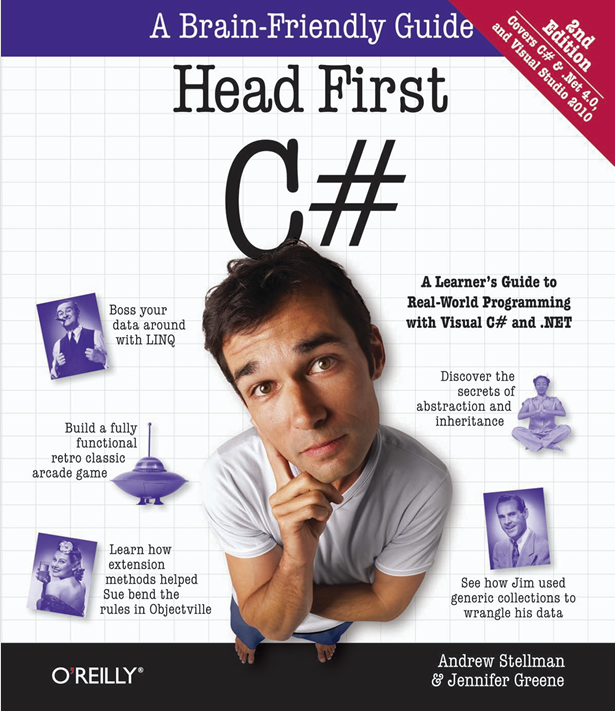
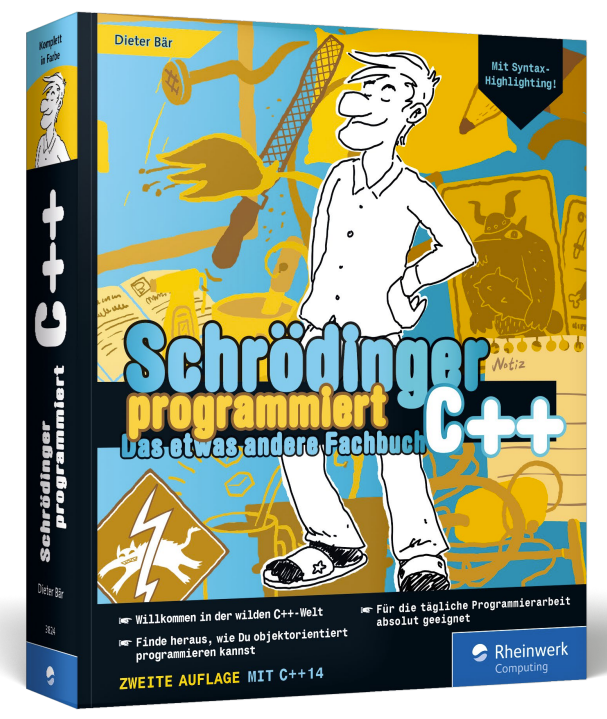
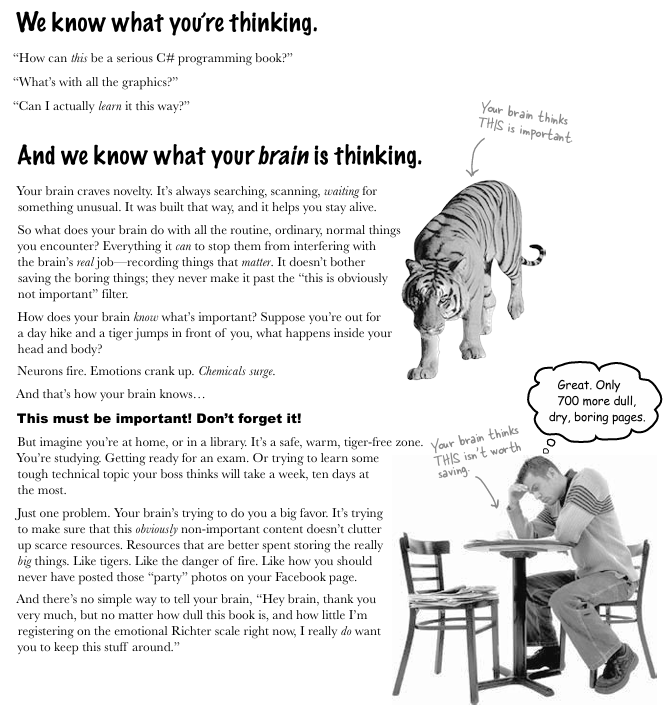
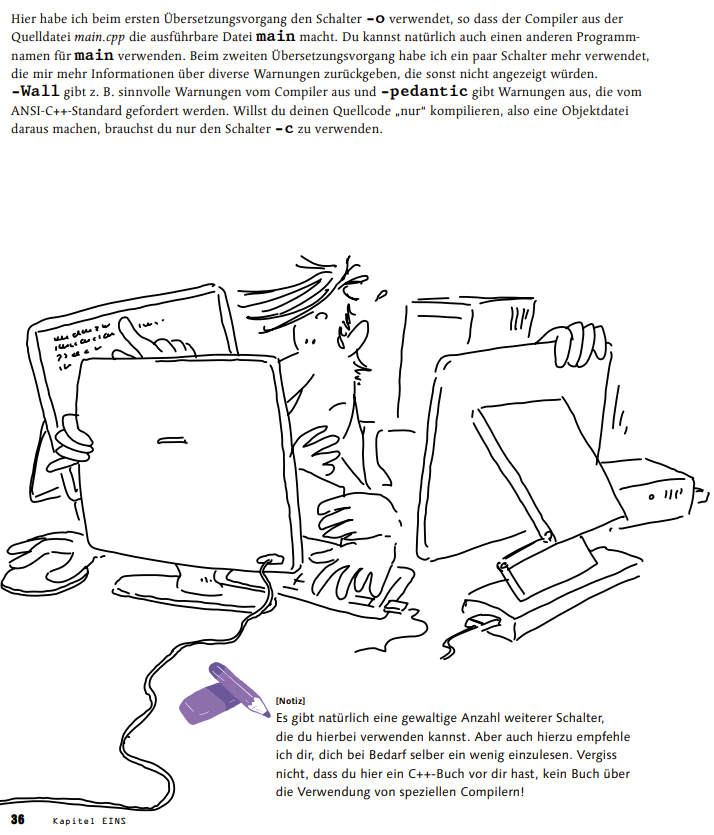
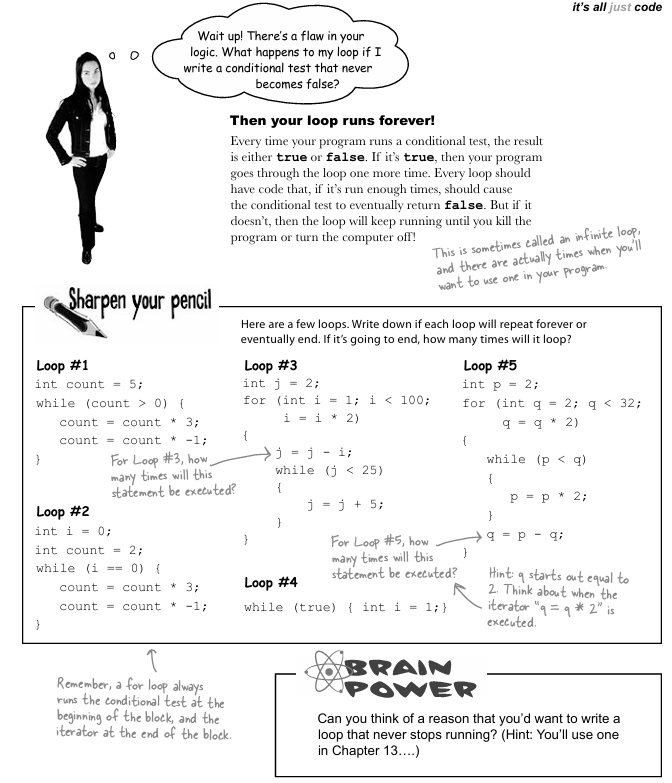
Are you familiar with the "Head First" books by O'Reilly? Or the "Schrödinger programmiert" series by Rheinwerk?
These images illustrate the didactic concept behind those books:
| Head First | Schrödinger programmiert |
|---|---|
 |
 |
 |
 |
 |
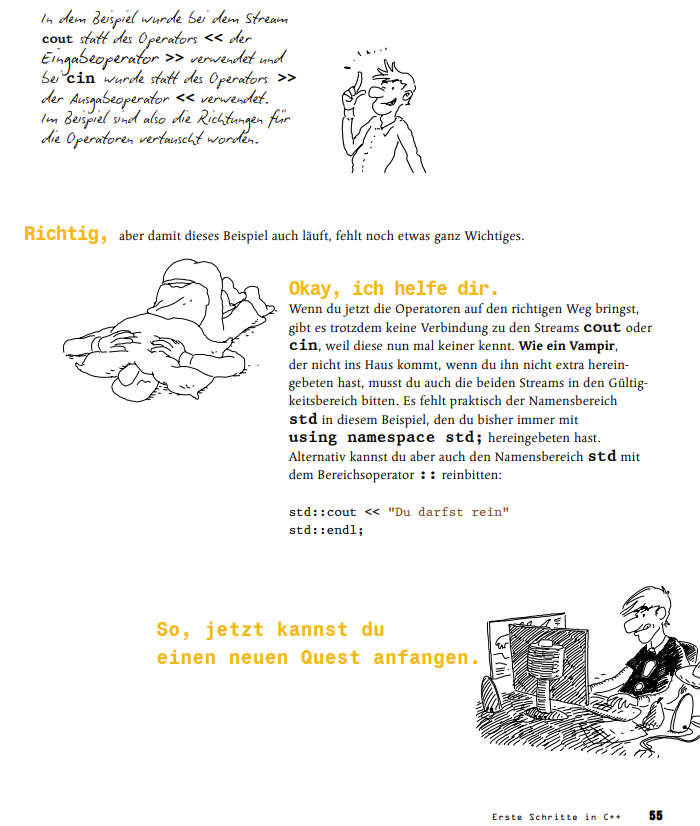 |
This concept has gained widespread popularity because it enables beginners to grasp complex topics and concepts with ease. Exactly what Polkadot needs!
Knowledge transfer in Polkadot Sensei follows these brain-friendly learning principles precisely:
- Visual and multisensory: Rich illustrations, comics, unconventional layouts, diagrams, and colorful elements.
→ Text + image reinforces memory retention. - Narrative and emotional: Stories, dialogues, and characters, humor, jokes, and real-world references.
→ Activates emotions and improves memorability. - Whole brain: Instead of pure logic (left hemisphere), creativity, pattern recognition, and fun (right hemisphere) are also engaged.
→ Reduces cognitive load and sustains attention.
This didactic approach is unique within the Polkadot ecosystem.
Target audience: ALL Polkadot beginners — regardless of technical background. In short: the next generation of Polkadot users, investors, and governance participants.
Polkadot Sensei is not aimed at developers. Offerings such as the Polkadot Blockchain Academy or Dot Code School already address that audience excellently. Polkadot Sensei fills a different gap: accessible knowledge and practical competence for everyone who wants to participate in the ecosystem — without needing to write code.
Knowledge spectrum: On polkadot.com/general/getting-started, information sources are categorized into Beginner, Intermediate, and Advanced levels. The lessons in Polkadot Sensei will cover the Beginner and Intermediate levels in terms of content. This goes beyond theoretical knowledge about the Polkadot ecosystem. The lessons serve as a practical companion: concrete instructions, tool recommendations, step-by-step guides, tips on where and how to get help, an overview of the community landscape, how to identify risks and stay safe, how to evaluate technically complex proposals, and much more — in short: everything a beginner needs not only to understand how Polkadot works, but to participate actively and independently.
Scope: 15 lessons (comparable to chapters) with an estimated total of 200–300 pages. All 15 lessons together form a book (English | PDF) in the brain-friendly didactic style described above.
4.1.1 Character Design
Polkadot Sensei features two main characters for its storyboard:
- Jiyu no Toshi (自由の闘士): The young karate student who progresses from white belt to sensei over the course of the game.
Jiyū no Tōshi – Japanese for: Freedom Fighter - O-Sensei (大先生): The wise grandmaster who teaches Jiyu no Toshi everything worth knowing about the Polkadot ecosystem.
Ō-Sensei – Japanese for: Great Master - Style: Realistic martial arts manga.
4.1.2 Current Design
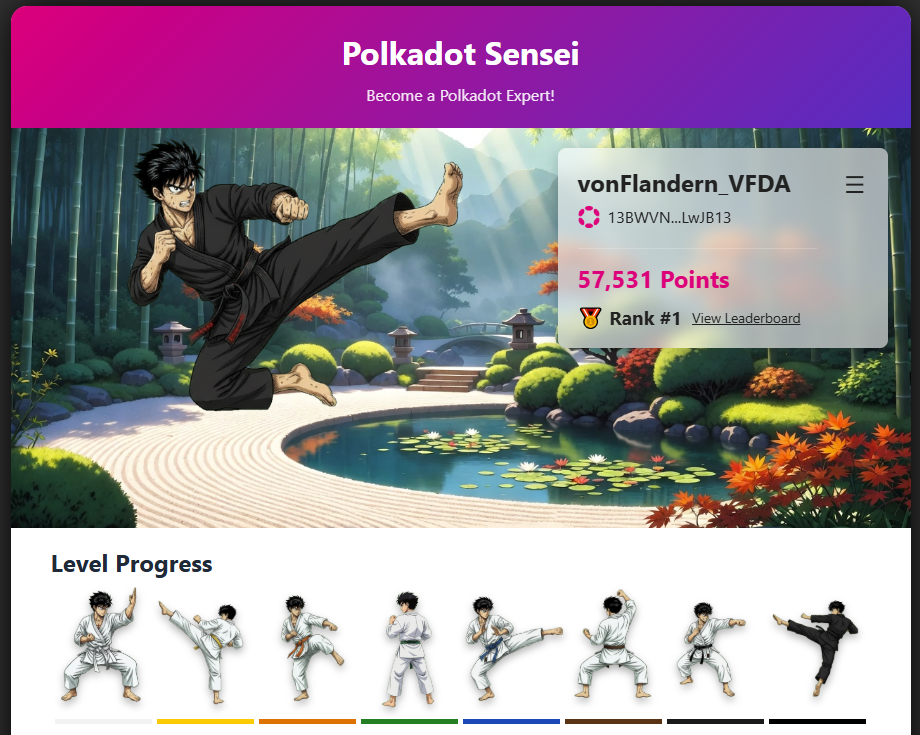
The current version (Polkadot Sensei v0.1.0-beta) still uses 2D images:
4.1.3 Future Design
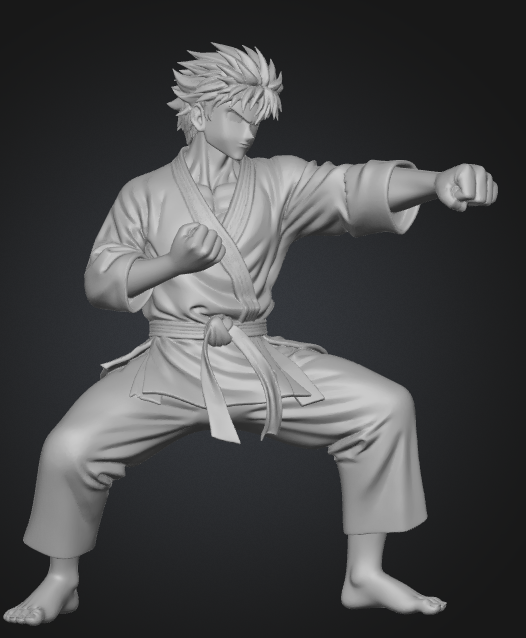
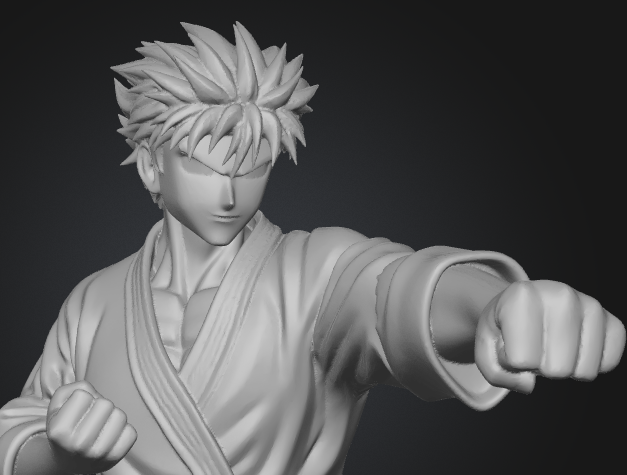
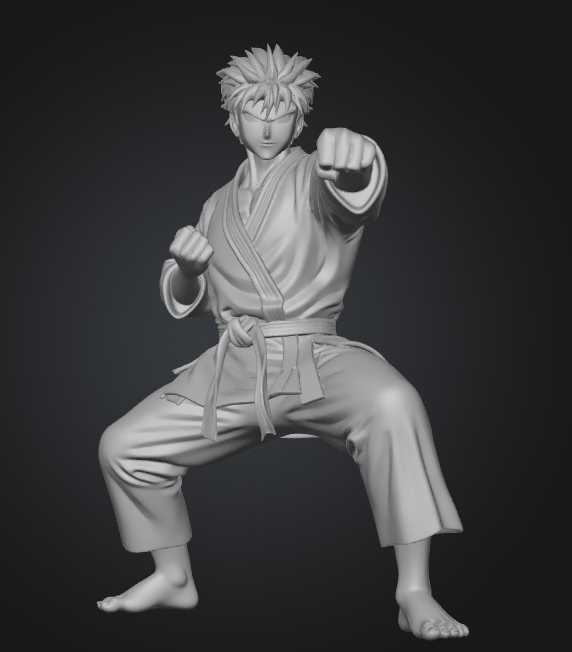
For the production release (Polkadot Sensei v1.0.0), Jiyu no Toshi and O-Sensei will be created as 3D characters. A first 3D draft of Jiyu already exists:
| Full Character | Character Close-Up |
|---|---|
 |
 |
 |
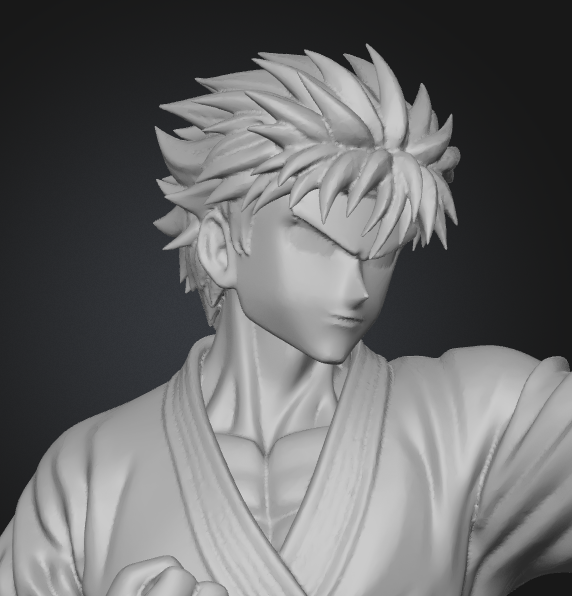 |
Please note that this is an early 3D draft intended for illustration purposes only! The final model will be more detailed and include textures and colors.
The 3D model of O-Sensei, as well as additional supporting characters and artifacts, are in planning and will be created as part of the production release.
4.1.4 The Advantages of 3D Models
The 3D models are created in Blender (open source software) and can subsequently be animated. In short: once the model is built, it can be posed like a movable puppet. Jiyu can, for example, perform a spectacular high kick (Jodan Mae Geri) in an equally spectacular scene. The same applies to facial expressions. The 3D models will feature various expressions, each tailored to the situation and setting.
Online (Game): The 3D models will be animated. This allows high-resolution videos to be displayed on the entry screen and in specific in-game situations (e.g., after reaching a new belt level), significantly enhancing the gameplay experience.
Note: When testing the game at vonFlandern.org/polkadot-sensei, you will still see 2D imagery in those locations.
Lessons: Following the didactic concept described above, the lessons will be highly visual: dialogues between Jiyu and O-Sensei, action scenes, stories with real-world references, etc. The 3D models allow these scenes to be created and rendered efficiently — an advantage not only for the initial creation of the lessons, but also for future updates.
4.2 Gamification
Polkadot Sensei is built like a game. The player signs up, enters a username, and can get started right away.
4.2.1 Login
To log in, the player connects their Polkadot OR Kusama wallet to the game — using the Polkadot Developer Signer (former: Polkadot.JS Extension), Talisman, SubWallet, Fearless Wallet or Enkrypt.
Security Notice: Polkadot Sensei uses only the public wallet address to query on-chain data. No signature. No password. No transactions. Ever — not during gameplay either. Without a signature, no one — including Polkadot Sensei — can access funds or seeds.
The production release (v1.0.0) will explain this clearly on the entry screen (including a browser extension tutorial) before the player connects their wallet.
Optimal scenario: The player first creates a brand new wallet address and only fulfills the OCR (On-Chain Requirements) when they are required in-game — by which point they will have already learned through the lessons that connecting a wallet is safe.
4.2.2 LIVE Testable Beta Version (Polkadot Sensei v0.1.0-beta)
You can already test Polkadot Sensei in the beta version. ← Highly recommended! It makes the concept immediately clear.
Please note: This version is designed to test the game mechanics, game flow, backend, initial user experience (UX), etc. under real conditions.
- Texts, images, and parameters are placeholders / test parameters.
- Levels: the questions in the levels are TEST questions. Additionally, the number of questions is significantly reduced.
- Lessons: the lessons have no content yet (the subject of this proposal).
- OCR: fully functional.
- CEA: fully functional.
Only the production release (Polkadot Sensei v1.0.0) will fully realize the concept presented here — both in terms of content and visual design.
4.2.3 Categories
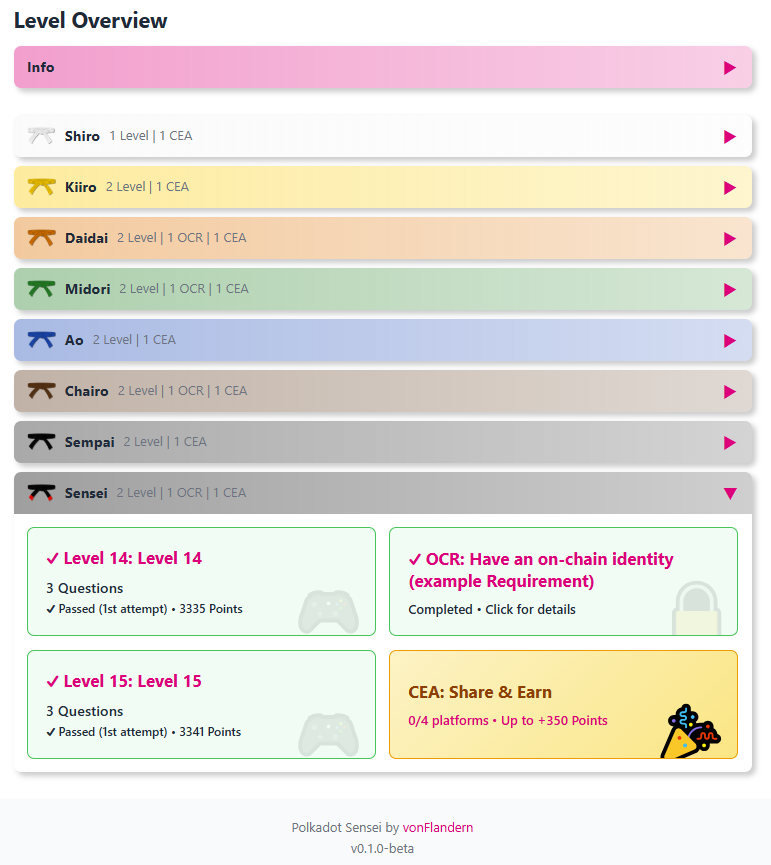
The game consists of 8 categories, representing belt colors and skill levels:
- Category 1: Shiro → White Belt / Gi (uniform): white
- Category 2: Kiiro → Yellow Belt / Gi: white
- Category 3: Daidai → Orange Belt / Gi: white
- Category 4: Midori → Green Belt / Gi: white
- Category 5: Ao → Blue Belt / Gi: white
- Category 6: Chairo → Brown Belt / Gi: white
- Category 7: Sempai → Black Belt / Gi: white
- Category 8: Sensei → Black Belt / Gi: black
4.2.4 Task Types
Each category includes up to 4 task types:
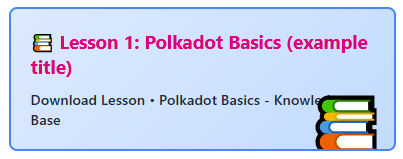
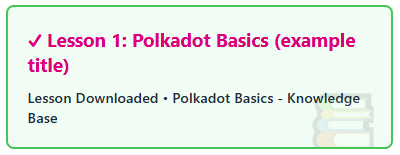
Task Type 1: Lessons
Before playing a level, the player must acquire knowledge. This happens through the lessons. In section 4.1 Didactics, you already learned HOW these lessons are structured. There will be a total of 15 lessons. The game code verifies whether a lesson has been downloaded (PDF version) or read online. Only once this condition is met can the player proceed to the associated level.
| Lesson before downloading the PDF | Lesson after downloading the PDF |
|---|---|
 |
 |
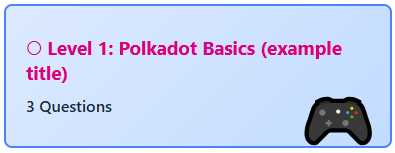
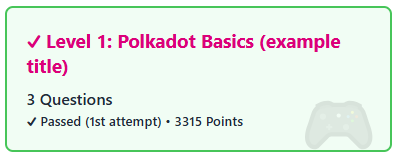
Task Type 2: Levels
Levels test the knowledge gained from the lessons. Each level contains 20–25 questions. Only one answer is correct per question. Each level also has a set number of power-ups: Hint and Add Time. The highest score is achieved by answering questions quickly and without using any power-ups.
| Level before playing | Level after playing |
|---|---|
 |
 |
4.3 OCR (On-Chain Requirements)
Task Type 3: OCR
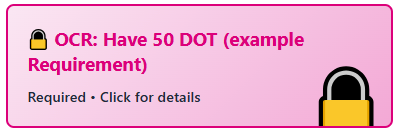
Some categories include OCR (On-Chain Requirements). To continue playing, the player must complete specific tasks on the Asset Hub or People Chain (Polkadot or Kusama are both supported). The knowledge needed to fulfill the OCR has been learned through the lessons. In the OCR, the player puts that knowledge into practice and progressively brings "skin in the game".
All OCR are completed off-game — meaning the player uses their preferred wallet app or tool directly on-chain. Polkadot Sensei only reads the result: it checks whether the requirement has been met. As mentioned, Polkadot Sensei never requests a signature — at any point.
| Example OCR | Chain |
|---|---|
| Hold 50 DOT / 10 KSM total balance | Asset Hub |
| 300 DOT / 50 KSM staked | Asset Hub |
| 3 Conviction Votes in OpenGov | Asset Hub |
| On-chain identity set | People |
| OCR before completion | OCR after completion |
|---|---|
 |
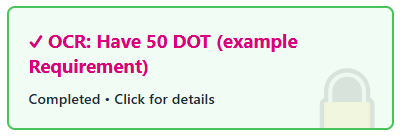 |
The OCR shown here are EXAMPLES. The game mechanics have of course been built so that all parameters are variable. The OCR parameters can therefore be determined in close coordination with the community via the Polkadot Forum.
Why OCR?
- 1. More REAL and NEW (potential) investors, governance participants, community members, etc.
- 2. Cheater protection: OCR protects (in most cases) against multiple accounts gaming the leaderboard top rankings. If a player does use multiple accounts and reaches the top rankings, it means they have fulfilled the OCR with each wallet — which is actually beneficial for the ecosystem.
- 3. Future idea: Players who have achieved "Polkadot Sensei" status have demonstrably proven knowledge, skin in the game, and active governance participation. This opens up the long-term possibility of establishing the Sensei status as a cross-platform quality credential — queryable via API, or implemented as a Non-Transferable NFT (Soulbound Token)/ Smart Contract directly on-chain.
A simple but universally understandable example: Someone opens a DOT shop where you can pay with DOT/KSM. A "Polkadot Sensei" receives a 5% discount on their purchase.
Or think bigger: verified Sensei status could grant increased voting weight in non-technical OpenGov referenda — a quality signal for informed, engaged community participation.
4.4 CEA (Community Engagement Actions)
Task Type 4: CEA
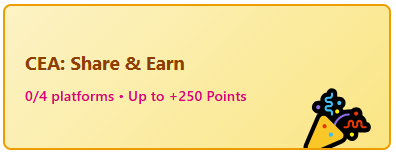
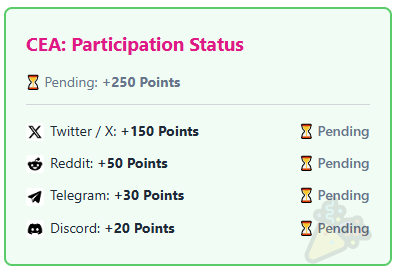
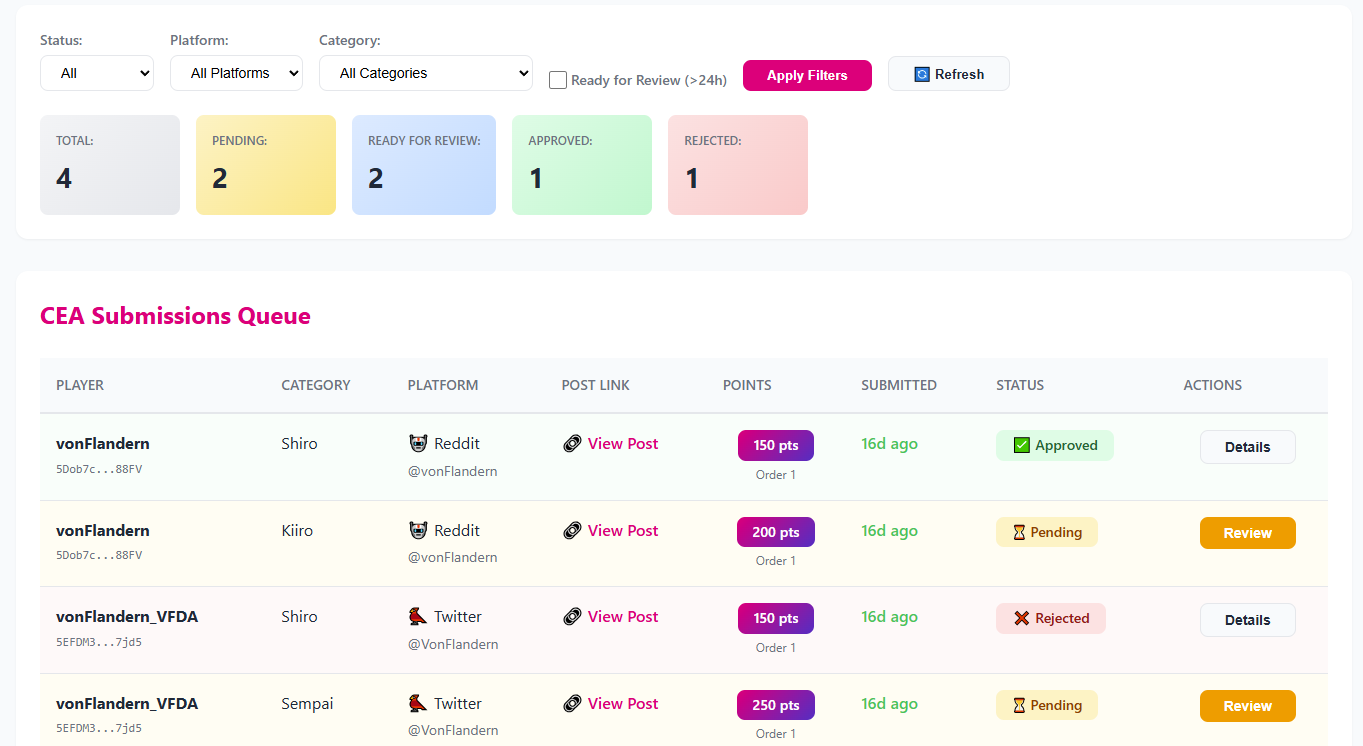
When a player reaches the next category (e.g., from white to yellow belt), they can — if they choose — share their progress on X, Reddit, Discord, and/or Telegram. A link is provided for this purpose. The player includes this link in their post. Once the post is published, they copy the post's URL and submit it via the CEA form in Polkadot Sensei. An admin (currently: the proposer) reviews after a minimum of 24 hours whether the post meets the criteria (this review process will be automated in a later version). If it does, the player is credited with a predetermined number of points, allowing them to achieve a higher ranking on the leaderboard.
| CEA before completion | CEA after completion (Pending) |
|---|---|
 |
 |
Why CEA?
CEA leverages the viral effect of social media. Every shared post is free advertising for Polkadot / Polkadot Sensei — at no additional marketing cost. The reach of any individual post naturally depends on the player's follower count.
CEA Management & Transparency
A dedicated admin dashboard is available for reviewing submitted CEA posts. Access is exclusively wallet-based, meaning trusted community members can be granted admin rights at any time.
4.5 On-Chain Profile
Via the hamburger menu (to the right of the player's name), the player can access their personal On-Chain Profile directly.
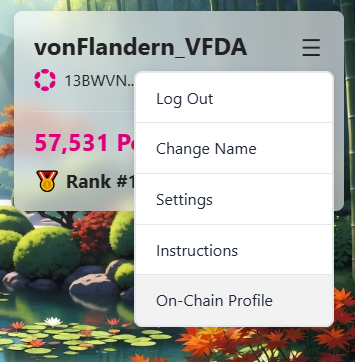
The On-Chain Profile displays all relevant on-chain data for the connected wallet in a clear and beginner-friendly format:
- Wallet address
- On-chain identity (including verification)
- Balances (Asset Hub, Relay Chain, People Chain)
- Staking details (coming soon)
- Validator status
- Referendum history
Example-Images of the On-Chain Profile (OCP) would take up too much space here, so here are some links instead:
- Simple: vonFlandern
- Unlocking expanded: vonFlandern_VFDA
- Unbonding expanded: vonFlandern_VFDB
Or simply try it yourself: Test the Polkadot Sensei Beta and view your own profile.
By the way: The On-Chain Profile works excellently as a daily, at-a-glance Polkadot and Kusama dashboard — completely independently of the game.
4.6 Competition
4.6.1 Points
Players' performance is measured in points.
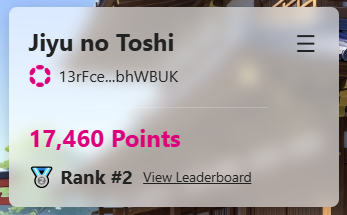
The following factors influence the score:
- Correct / incorrect answers.
- Time taken to answer questions. Calculation is based on milliseconds.
- Power-ups: Add Time/ Hint. Using power-ups reduces the score.
- Approved CEA contribute to the player's total score.
4.6.1.1 First Attempt Rule
Only the FIRST attempt counts toward the score.
Example: A player plays Level 1 for the first time and fails (too many wrong answers or time runs out). They must replay the level to continue. For scoring purposes and the leaderboard, only the first attempt counts. If the player replays and passes, this has no effect on their score — but they can continue the game. This rule applies equally to all players and ensures a fair leaderboard.
4.6.2 Leaderboard
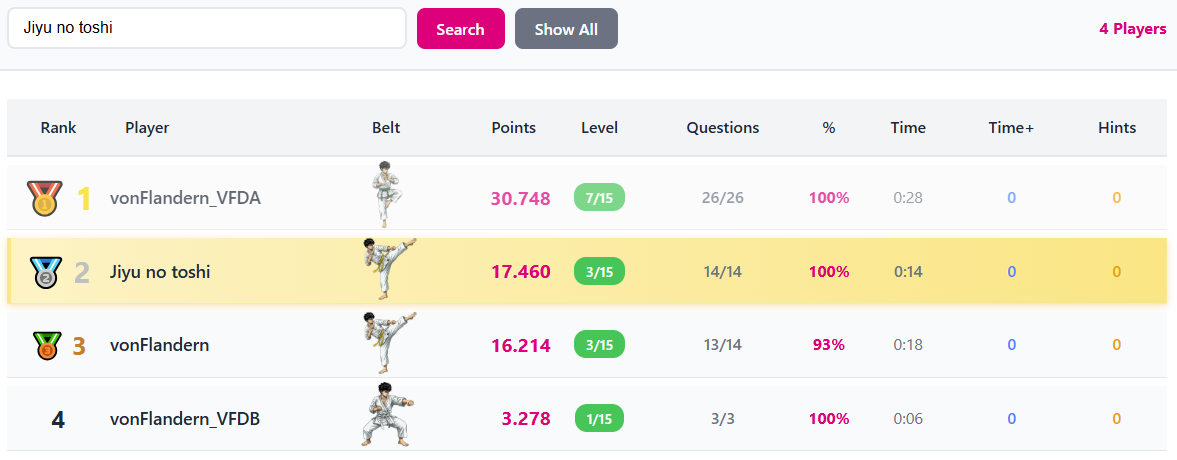
Players compete for the best ranking on the publicly visible leaderboard.
4.6.2.1 Leaderboard Psychology
From a psychological perspective, several well-researched mechanisms come into play:
- Social comparison: People instinctively compare themselves to others (Festinger, 1954). A public leaderboard makes this comparison visible and automatically creates the desire to outperform others.
- Extrinsic motivation: A ranking gives the player a concrete, measurable goal beyond the acquisition of knowledge itself — e.g., "I want to be in the top 10."
- Dopamine feedback loop: Every improvement in ranking triggers a small dopamine release. The brain wants to repeat this feeling, motivating the player to keep playing and perform well.
- Status and prestige: A public ranking is a form of social recognition — especially relevant in the Web3 context, where community status matters.
Conclusion: In the pursuit of a high ranking, several win-win situations emerge between the player and the Polkadot community:
| Task Type | WIN Player | WIN Community |
|---|---|---|
| Lesson | Gains clear, accessible knowledge | Community member who actually knows their stuff |
| Level | Has fun while proving their knowledge | Community member with ATTESTED knowledge |
| OCR | Participates ACTIVELY in the ecosystem's growth | NEW investor / staker / voter |
| CEA | Showcases their learning progress | Polkadot gains free reach on social media |
4.6.2.2 Leaderboard Anonymity
The leaderboard displays only the freely chosen username and the player's results — no wallet addresses.
4.6.2.3 Leaderboard Hygiene
- Automatic username check: When entering a username, a profanity word list checks whether the name is acceptable. The list does not claim to be exhaustive. Therefore, the leaderboard will be reviewed periodically for offensive, discriminatory, or abusive names. Flagged names will be removed or renamed promptly.
- Inactivity rule: Players who have had 0 points on the leaderboard for more than 14 days will be automatically removed starting with v1.0.0.
5. Budget Breakdown
This funding covers exclusively the creation of the complete v1.0.0 content production. The technical foundation (game mechanics, OCR, CEA, On-Chain Profile, leaderboard) has already been completed in the live beta v0.1.0 through the proposer's own efforts. The creation of all 3D characters and artifacts, their animation, and the manual CEA review are also being handled by the proposer personally.
Proposer's Own Contribution
| Pos. | Category | USD |
|---|---|---|
| 1 | Planning and development of Polkadot Sensei v0.1.0-beta | 28,800 |
| 2 | Creation of 3D characters and artifacts (modelling, rigging, textures) & animations | 11,200 |
| 3 | CEA review (6 months from v1.0.0 launch) | 800 |
| Total Own Contribution | 40,800 |
Requested Amount
The referendum exclusively funds content creation and the final production release.
| Pos. | Category | USD | Description |
|---|---|---|---|
| 4 | Content creation (15 lessons) | 27,000 | Complete brain-friendly learning material incl. illustrations, storytelling, and practical guides |
| 5 | Professional proofreading + final layout | 4,000 | Native English proofreading + high-quality PDF layout |
| 6 | Production release & technical polish | 2,400 | Video embedding, UX refinement, thorough testing |
| 7 | Project management, community updates, launch | 1,600 | 8 months of coordination + transparent forum updates |
| 8 | Contingency | 1,800 | Buffer for potential community feedback adjustments |
| 9 | KPI Dashboard | 500 | Public dashboard for transparent tracking of success metrics |
| Total | 37,300 |
On Position 4
Flat rate of 1,800 USD / lesson × 15 = 27,000 USD
Content creation is calculated at a flat rate per lesson, as it is a creative process in which research, storytelling, didactic structuring, and visual production are deeply intertwined and cannot meaningfully be broken down into individual hours.
Why 1,800 USD per lesson?
A market analysis shows that comparable work — outsourced externally — costs between 1,875 and 5,100 USD per lesson:
| Component | Range USD |
|---|---|
| Blockchain writing | $500–$1,200 |
| Instructional design (didactics) | $400–$900 |
| Illustration (15–20 pages) | $975–$3,000 |
| Total per lesson | $1,875–$5,100 |
6. Milestones
| Milestone | Period | Deliverables |
|---|---|---|
| M1 | Month 1–2 | Lessons 1–4 incl. illustrations, comics, and associated quiz questions (levels) |
| M2 | Month 3–4 | Lessons 5–9 incl. illustrations, comics, and associated quiz questions (levels) |
| M3 | Month 5–6 | Lessons 10–15 incl. illustrations, comics, and associated quiz questions (levels) |
| M4 | Month 7–8 | Professional proofreading + final PDF layout, 3D integration, video embedding, UX refinement, testing, launch at polkadot-sensei.org |
A forum update on Polkadot Forum will be published after each milestone.
Completed lessons will be implemented directly into Polkadot Sensei — playable at vonflandern.org/polkadot-sensei and after launch at polkadot-sensei.org.
7. Success Metrics / KPIs
Following the launch of Polkadot Sensei v1.0.0, a public dashboard will be made available providing the following information:
| Metric | Description |
|---|---|
| Registered players | Number of wallets that have signed up for Polkadot Sensei |
| Levels completed | Number of completed levels |
| OCR fulfilled | Number of fulfilled On-Chain Requirements |
| CEA posts | Number of verified Community Engagement posts |
8. Open Source, License & Domain
Following a successful referendum, Polkadot Sensei will be publicly launched at https://www.polkadot-sensei.org.
8.1 Source Code
The complete source code will be published on GitHub under the MIT License — open, freely usable, and permanently accessible to the community.
8.2 Content
All content — texts, learning materials, and lessons — will be published under Creative Commons CC BY 4.0: free to use with attribution.
8.3 Artwork & Characters
Artwork & Characters (Jiyu no Toshi & O-Sensei):
- Ownership: Copyright and commercial exploitation rights remain with vonFlandern to ensure the long-term quality and consistency of the storyline.
- Community license: We explicitly grant the Polkadot community the right to use the artwork freely for non-commercial purposes (e.g., memes, social media posts, educational presentations, or fan art).
- Goal: We want Jiyu and O-Sensei to become iconic figures of the ecosystem. As long as the use aligns with Polkadot's values and does not involve the commercial sale of merchandise or third-party services without prior agreement, such use is expressly encouraged.
9. About the Proposer
Tom H.Y. De Visscher (operator of vonFlandern.org) has been active in the Polkadot ecosystem since 2023 — first as a staker, then as a validator, governance participant, and now as the developer of Polkadot Sensei.
Validator
vonFlandern was a participant in the Web3 Foundation
- Thousand Validators Program (1KV)
- Decentralized Nodes Programme (DN) – Cohorts 1, 2, 2.1 & 3
During this time, Polkadot and Kusama nodes including backup nodes were operated in the following locations:
- Canada
- France
- UK
- Mumbai
- Cape Town
All nodes were run on bare metal hardware with Ubuntu and Debian operating systems.
Former Polkadot nodes: vonFlandern_VFDA | vonFlandern_VFDB
Former Kusama nodes: vonFlandern_VFKA | vonFlandern_VFKC
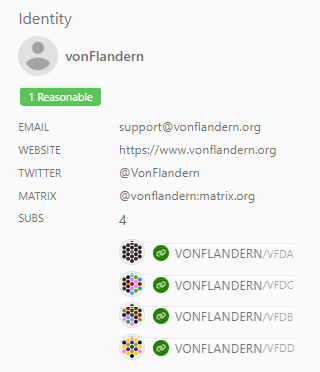
Main identity: vonFlandern
Governance
vonFlandern analyzes Polkadot referenda methodically using a 19-point evaluation system.
Results are published transparently at vonflandern.org/pol-ref.
10. Closing Appeal
Polkadot Sensei is not a one-man show — it's a community project. The platform is built by one person, but it is designed for and with the Polkadot community.
If the referendum passes, every community member is warmly invited to:
- Shape the content: Submit ideas and suggestions for the lesson storyboards — what topics matter most to you? What confused you when you first discovered Polkadot?
- Define the rules: OCR parameters will be determined in close coordination with the community via the Polkadot Forum.
- Join the team: Community members who would like to take on admin rights for CEA review are welcome to get in touch.
- Build on it: If you want to use the Sensei status as a credential in your own project — reach out.
Polkadot Sensei belongs to the ecosystem. Let's build it together.